
The Avocado Oil Scam Hiding in Your Food
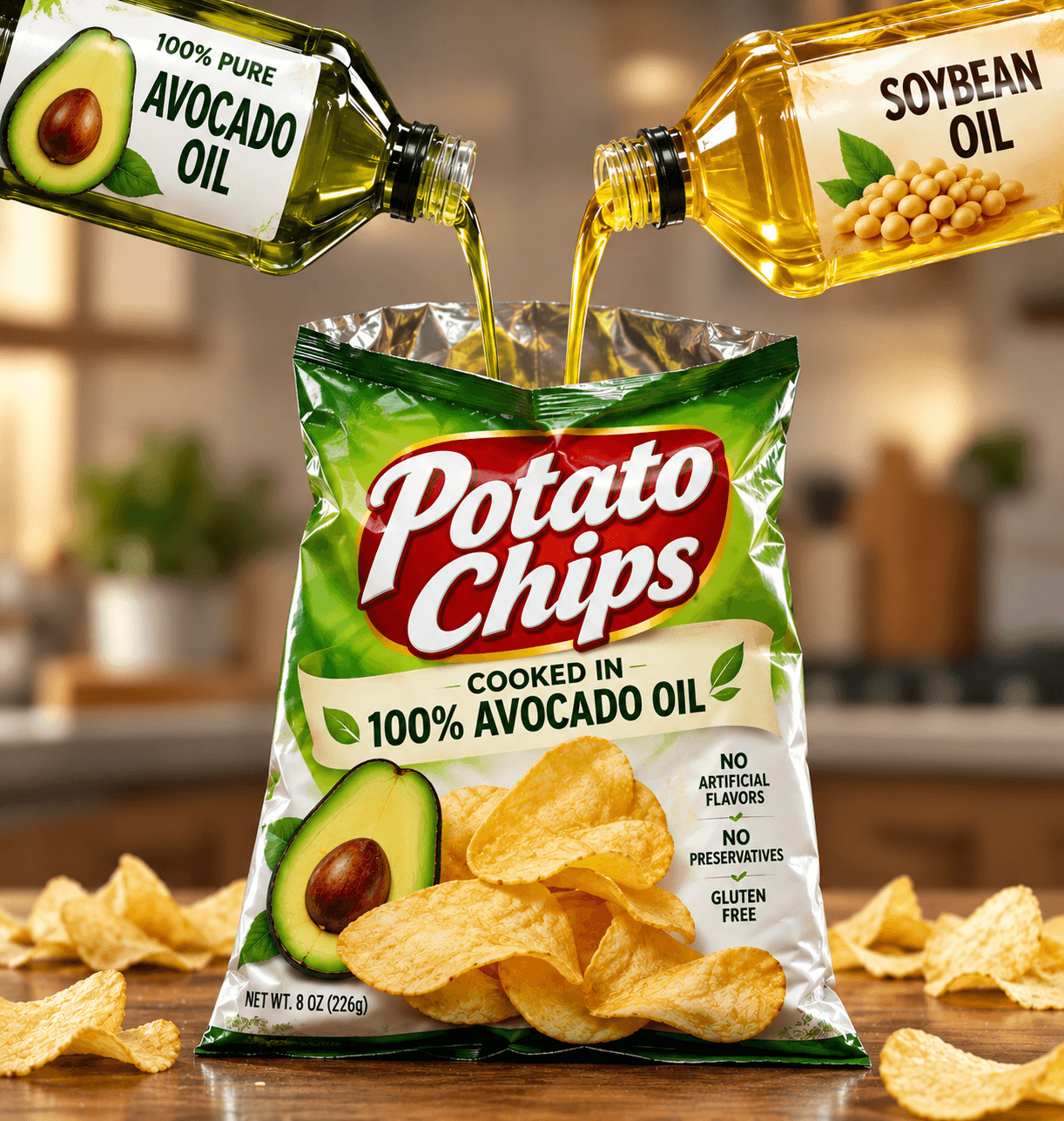
You paid extra for the avocado oil.
You read the label. You skipped the cheaper option. Maybe you specifically chose those chips, that mayonnaise, or that salad dressing because the package told you it was made with avocado oil.
But new research suggests there’s a serious problem:
The avocado oil in many processed foods may not actually be authentic avocado oil.
89% Failed the Test
In a 2026 study, UC Davis researchers analyzed 54 commercially available foods labeled as containing avocado oil, including potato chips, mayonnaise, and salad dressings.
The result?
48 out of 54 products—89%—had oil compositions inconsistent with authentic avocado oil.
The numbers were even more striking when broken down by category:
93% of the chips tested were inconsistent with authentic avocado oil.
71% of the mayonnaise products were inconsistent.
100% of the salad dressings tested were inconsistent.
Researchers examined fatty acids and sterols—the chemical fingerprints that can help distinguish avocado oil from other oils.
And this wasn’t simply a case of frying or food processing changing the oil beyond recognition. The researchers specifically tested whether frying and emulsification could substantially alter those markers and found that the important authenticity markers remained largely stable.
You're Paying for the Label
This is what makes the issue especially frustrating.
Avocado oil isn't marketed like an ordinary commodity oil.
It's marketed as a premium ingredient.
Consumers often intentionally seek out foods advertising avocado oil—and manufacturers can charge accordingly.
So when someone buys a bag of chips specifically because the package advertises avocado oil, that ingredient isn't some insignificant detail.
It's part of what they're paying for.
If the oil inside doesn't match authentic avocado oil, the issue isn't merely nutrition.
It's transparency.
You should get what the label says you're buying.
This Problem Didn't Start Yesterday
The warning signs have been building for years.
In 2020, UC Davis researchers tested bottled avocado oils and reported that 82% of the samples were either oxidized before their expiration date or mixed with other oils.
Some of the most extreme examples were astonishing: three bottles marketed as pure or extra-virgin avocado oil contained oil that was nearly entirely soybean oil.
Then another UC Davis investigation of private-label avocado oils found that only 31% of the samples tested were pure.
Now the concern has moved beyond bottles of cooking oil and directly into the processed food aisle.
Chips.
Mayonnaise.
Salad dressing.
Food consumers may deliberately choose because they believe avocado oil is the primary oil being used.
How Can This Happen?
One important point often gets lost in the outrage:
The brand on the front of the package may not necessarily know that its avocado oil supply is adulterated.
Food manufacturers frequently purchase oils through suppliers, brokers, and complex supply chains. UC Davis researchers have suggested that adulteration may occur farther upstream.
That doesn't eliminate the problem.
It demonstrates how badly stronger verification is needed.
If a company is going to put “avocado oil” prominently on its package, consumers should reasonably expect the company to verify that the oil it purchased is actually avocado oil.
Read the Label—but Demand More Than a Label
Consumers have been told for years:
“Just read the ingredients.”
But an ingredient list is only useful when what's printed on it accurately represents what's in the food.
The new avocado-oil research exposes an uncomfortable weakness in that advice.
Consumers can't carry laboratory equipment into the grocery store.
We can't analyze fatty acids and sterols before throwing a bag of chips into the cart.
We depend on manufacturers, suppliers, regulators, and retailers to maintain an honest food supply.
That's why this matters.
The Bottom Line
Avocado oil has become a valuable marketing tool.
Put the words “made with avocado oil” on the front of a package, and suddenly an ordinary processed food can look cleaner, healthier, and more premium.
But premium marketing should come with premium accountability.
If the package says avocado oil, consumers shouldn't have to wonder whether they're actually getting avocado oil.
We shouldn't need a chemistry lab to find out whether the ingredient list is telling the truth.